

Craftsmanship You Can See Today
Value You Can Count On Tomorrow
The Pride That Comes From Knowing You Chose Right
You've probably talked to three or four builders by now.
And they all sound... similar, don't they?
Same promises about quality. Same reassurances about timelines. Same confident talk about "doing things right."
So how do you actually know who to trust with your family's biggest investment?
That's the question Clint Newton asked himself after watching too many good families get burned by builders who cared more about closing day than the client's next twenty years.
Most builders ask: "Can we build this?" and "Will it pass inspection?"
Clint asks something different: "What will this home -- and this community -- be worth in 10, 20, or 40 years?"

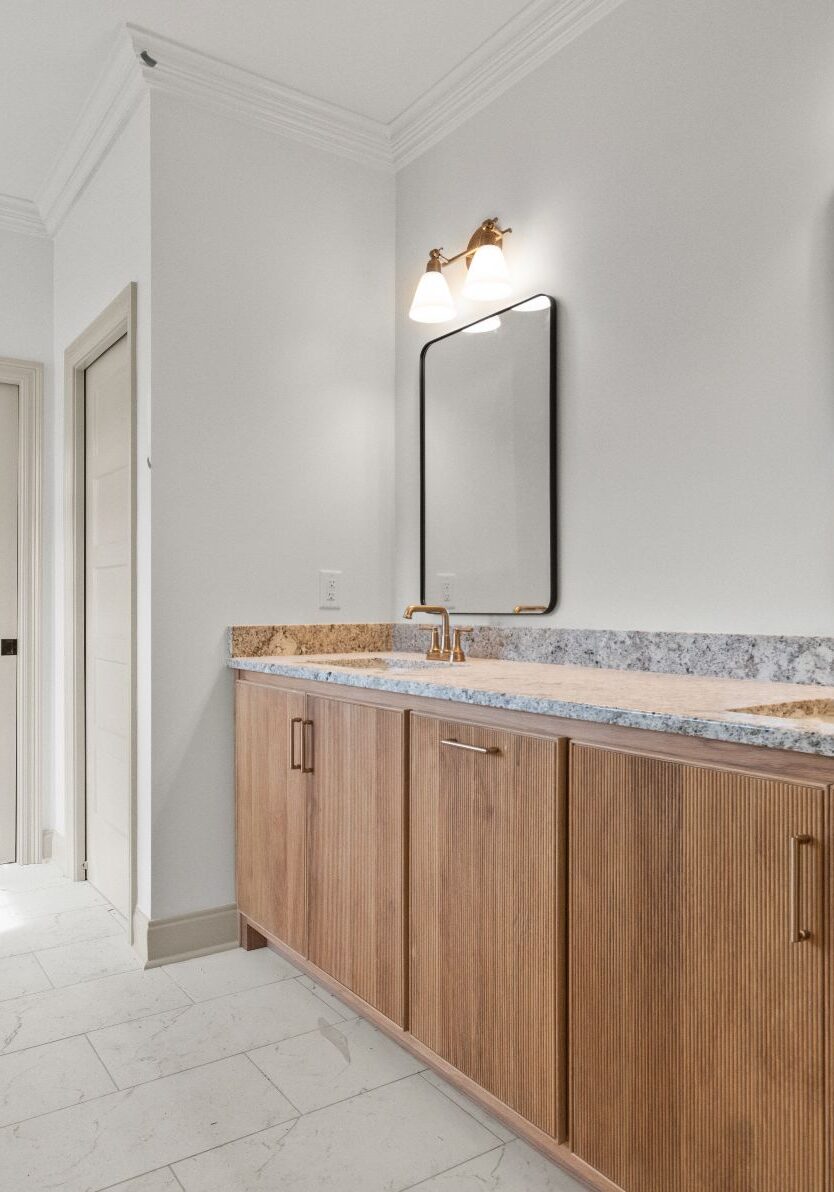
That one question changes everything.
- It's why Newton Homes builds fewer homes (properly engineered to last decades, not just pass code).
- It's why we develop and control our own communities (so cheap builds next door don't destroy your equity).
- And it's why families choose us when they want both the craftsmanship they can see today and the long-term value they can count on tomorrow.
Picture yourself ten years from now: your home still feels solid, your neighborhood still feels right, and when someone asks "Who built your place?" you smile and say "Newton Homes -- best decision we made."
That's what happens when your builder is thinking about your next 20 years, not just his next sale.
Keep reading to discover the story behind the builder who protects your investment like it's his own. Or if you'd rather talk through your specific situation first, schedule a time to meet with Clint.
A Ten-Year-Old Kid and a
Pile of Timber
Long before Newton Homes existed, there was an excited kid standing on a dirt block, watching his own home take shape.
"I remember being ten years old," Clint Newton says. "My parents were building a house, and I was there every day. Toting lumber. Talking to the guys. Watching it go from dirt to a finished home."
Clint didn't grow up in a construction family. No builders. No trades. His stepfather worked for the postal service. His mom stayed home to raise six kids in a blended family. They were middle-class, values-driven, and practical. Nothing was handed to him.
But from that early experience, something clicked.
"I was fascinated by it," Clint recalls.
"Wood. Structure. Seeing something designed and then actually built. I didn't know it then, but that was the seed."
By 19, Clint was already the youngest licensed real estate agent in Alabama. He chose property because it put him close to what fascinated him most: how homes are valued, how they're built, and what happens to families who invest everything into them.
"I rode the coattails of people smarter than me," he says. "I watched. I learned. I paid attention."
And slowly, inevitably, real estate pulled him back toward what had always mattered most.
Building.

A Ten-Year-Old Kid and a
Pile of Timber
Long before Newton Homes existed, there was an excited kid standing on a dirt block, watching his own home take shape.
"I remember being ten years old," Clint Newton says. "My parents were building a house, and I was there every day. Toting lumber. Talking to the guys. Watching it go from dirt to a finished home."
Clint didn't grow up in a construction family. No builders. No trades. His stepfather worked for the postal service. His mom stayed home to raise six kids in a blended family. They were middle-class, values-driven, and practical. Nothing was handed to him.
But from that early experience, something clicked.
"I was fascinated by it," Clint recalls.
"Wood. Structure. Seeing something designed and then actually built. I didn't know it then, but that was the seed."
By 19, Clint was already the youngest licensed real estate agent in Alabama. He chose property because it put him close to what fascinated him most: how homes are valued, how they're built, and what happens to families who invest everything into them.
"I rode the coattails of people smarter than me," he says. "I watched. I learned. I paid attention."
And slowly, inevitably, real estate pulled him back toward what had always mattered most.
Building.


The Pattern Clint Couldn't Unsee: Good People Getting Burned by Bad Builders
Working in real estate gave Clint a front-row seat to an uncomfortable truth.
He saw how homes were priced. How corners were cut. How buyers -- often spending their life savings -- were treated like numbers.
"You'd see builders charging twenty grand for something that cost three," Clint says. "Not because it took longer. Not because it was complex. Just because they could."
Then came the rise of volume builders.
- Rows of identical houses
- Tiny blocks
- Cheap materials
- Fast sales
No regard for longevity, community, or the buyer's future.
"I've seen it all," Clint says. "Homes framed on minimum code. Roofs sagging. Particle board behind brick. Electrical done wrong. Stuff that shouldn't pass, but does."
What broke his heart wasn't just poor workmanship. It was what it did to people.
"They buy a home thinking it's an investment," he says. "Six months later, it's worth less than what they paid. Their equity's gone. And the builder's already moved on."
For Clint, that wasn't just bad building. It was bad values.
The Pattern Clint Couldn't Unsee: Good People Getting Burned by Bad Builders
Working in real estate gave Clint a front-row seat to an uncomfortable truth.
He saw how homes were priced. How corners were cut. How buyers -- often spending their life savings -- were treated like numbers.
"You'd see builders charging twenty grand for something that cost three," Clint says. "Not because it took longer. Not because it was complex. Just because they could."
Then came the rise of volume builders.
- Rows of identical houses
- Tiny blocks
- Cheap materials
- Fast sales
No regard for longevity, community, or the buyer's future.
"I've seen it all," Clint says. "Homes framed on minimum code. Roofs sagging. Particle board behind brick. Electrical done wrong. Stuff that shouldn't pass, but does."
What broke his heart wasn't just poor workmanship. It was what it did to people.
"They buy a home thinking it's an investment," he says. "Six months later, it's worth less than what they paid. Their equity's gone. And the builder's already moved on."
For Clint, that wasn't just bad building. It was bad values.

Why 'Meets Code' Became the Enemy?
The turning point came on a house walk-through with a potential real estate client.
Clint was inspecting a subdivision -- new homes, freshly built, but already showing problems.
Sagging subfloors. Doors that wouldn't close. Framing done on 24-inch centers to save a few hundred dollars per house.
And the families living there had no idea.
"They trusted the builder," Clint says. "They believed 'code-compliant' meant 'built right.' But code is the minimum. It's the floor, not the ceiling."
That's when it hit him. You're not just building a house. You're building someone's future. Their family life. Their security. Their biggest asset.
And most builders were treating it like a transaction.
"Right then, I knew," he says. "If I was going to build, I'd do it differently. I'd build fewer homes -- properly.
I'd engineer for forty years, not four. And I'd never cut a corner I wouldn't accept in my own home."
That decision became Newton Homes.
How We Build Differently
And Why It Matters in Year 15

Homes Engineered to Last Decades

Homes Engineered to Last Decades, Not Just Pass Inspection
Most builders frame at 24-inch centers because code allows it. We build at 16.
Why does that matter? Because your home stays solid, quiet, and problem-free -- not just for the first year, but for decades. No sagging floors. No squeaky subfloors. No structural settling that costs you thousands to fix later.
We over-engineer with LVLs, I-joists, and stronger subfloors to eliminate the problems that show up in year ten, fifteen, twenty.
Our homes are designed to last 40–50 years. Not just long enough to close.
"If I wouldn't build it for my family," Clint says, "I won't build it for yours."

The Part That Protects Your Equity

The Part That Protects Your Equity
That Most Buyers Don't Realize Until It's Too Late
Here's what most people don't realize until it's too late: the builder you choose today influences who builds next door tomorrow. And that controls your resale value.
Think about it. You invest $450,000 into a beautiful custom home. Three years later, the builder sells the remaining land to a tract builder who throws up cheap houses at $320,000.
Suddenly, your "comparable sales" are destroyed. Your equity vanishes. And there's nothing you can do about it.
That's why Newton Homes develops and plans its own communities.
Larger lots. Privacy. Side-entry garages. Streets that feel open, not cramped.
And here's the part that protects your investment: we don't sell remaining land to tract builder who destroy comparable sales. No fire-sale pricing later. No cheap builds in your backyard that kill your equity.
Your investment is protected because we treat you like what you truly are: an investor in our neighborhood -- not a transaction.

True Transparency Can Actually Verify

True Transparency You Can Actually Verify
Every builder claims to be "transparent." We prove it.
When clients ask why we charge a certain amount for granite countertops after finding it cheaper online, Clint doesn't get defensive.
He pulls up the supplier invoice, the installation cost, and our 12% margin. Shows them everything. Line by line.
More often than not? They thank him -- and upgrade to quartz.
"You can take our numbers home," Clint says. "You'll know exactly where your money's going. Materials. Labor. Upgrades. Margins. No bundled numbers. No inflated upgrade pricing. No surprises."
Because transparency isn't a slogan here. It's how trust is built.

Faster Builds, Never Oversell Capacity

Faster Builds Because We Don't Oversell Our Capacity
A typical Newton home is completed on time and on schedule.
Not because we rush -- but because we manage our trades, pre-order materials, and never oversell capacity.
Most builders take on 15 projects when they only have the trades to realistically manage eight. Then timelines blow out to 12, 14, 18 months (while houses sit idle). Families are left in limbo. Budgets spiral. Stress compounds.
We respect schedules, trades, and timelines so your life isn't left in chaos.
That's why we build fewer homes -- properly.

Custom Without the Punishment Pricing

Custom Without the Punishment Pricing
Want hardwood instead of carpet? A wood ceiling instead of vinyl?
You pay the real cost difference -- not an exaggerated "upgrade tax."
We make a fair margin without taking advantage. Because you deserve to know what things actually cost, and to make decisions based on honest numbers, not inflated ones.
"We don't play pricing games," Clint says. "You'll know what we paid, what it costs to install, and what our margin is. That's it."
What It Actually Feels Like to Build With Someone Who's Thinking 20 Years Ahead
Here's what changes when your builder is thinking about your future, not just their next sale:
You'll never wonder if they're hiding something. Because everything's on the table. Invoices. Margins. Material choices. Trade-offs.
You'll sleep better knowing someone's protecting your equity. Because the community is designed to hold value, not just fill lots.
You'll have clarity, not chaos. Because schedules are respected, capacity isn't oversold, and your build stays on track.
You'll look back in ten years and think "we chose right." Because the home was engineered to last, the neighborhood was designed to endure, and the builder treated you like family.
That's not marketing language. That's what happens when someone asks the right question first: "What will this home be worth in 20 years?"
What It Actually Feels Like to Build With Someone Who's Thinking 20 Years Ahead
Here's what changes when your builder is thinking about your future, not just their next sale:
You'll never wonder if they're hiding something. Because everything's on the table. Invoices. Margins. Material choices. Trade-offs.
You'll sleep better knowing someone's protecting your equity. Because the community is designed to hold value, not just fill lots.
You'll have clarity, not chaos. Because schedules are respected, capacity isn't oversold, and your build stays on track.
You'll look back in ten years and think "we chose right." Because the home was engineered to last, the neighborhood was designed to endure, and the builder treated you like family.
That's not marketing language. That's what happens when someone asks the right question first: "What will this home be worth in 20 years?"

Why This All Matters to Clint
And Why It Should Matter to You
Growing up without his father taught Clint what it feels like when someone's not there when you need them. That's why he answers his phone. Shows up to job sites. And never leaves families wondering what's happening with their build.
"I wanted to be a better father," he says. "A better husband. A better man."
That's why Newton Homes isn't just a business -- it's a commitment to being present. In your build. In your community. In the long run.
A local, family-run business. Rooted in the community. Focused on relationships, not finishing and moving on.
"I want people to look back in 20 years and say, 'That was the right decision.'"
Because in the end, Newton Homes doesn't build houses. We build places where families grow. Where equity is protected. Where life actually happens.
And that's a legacy worth building.

Why This All Matters to Clint
And Why It Should Matter to You
Growing up without his father taught Clint what it feels like when someone's not there when you need them. That's why he answers his phone. Shows up to job sites. And never leaves families wondering what's happening with their build.
"I wanted to be a better father," he says. "A better husband. A better man."
That's why Newton Homes isn't just a business -- it's a commitment to being present. In your build. In your community. In the long run.
A local, family-run business. Rooted in the community. Focused on relationships, not finishing and moving on.
"I want people to look back in 20 years and say, 'That was the right decision.'"
Because in the end, Newton Homes doesn't build houses. We build places where families grow. Where equity is protected. Where life actually happens.
And that's a legacy worth building.

Ready to Discover If Newton Homes Is Right for You?
If you're tired of vague answers and high-pressure sales tactics...
If you want a builder who thinks in decades, not phases...
If you're looking for someone who will tell you the whole truth -- even when it's not what you want to hear...
Then let's talk. Book a free Building Clarity Session with our team. No pressure. No obligation. Just honest conversation about your situation, your timeline, and whether Newton Homes is the right fit.
Because when you build with someone who's thinking about your next 20 years -- not just their next sale -- everything changes. And the decision you make today affects whether you look back and say "We chose right" -- or wish you had. Let's make sure it's the first one.

A NOTE ON TIMING:
We typically book a few clients and only take on projects we can complete properly. If you're planning to build in 2027, let's start the conversation now -- so we can plan your project right, not rush it.