

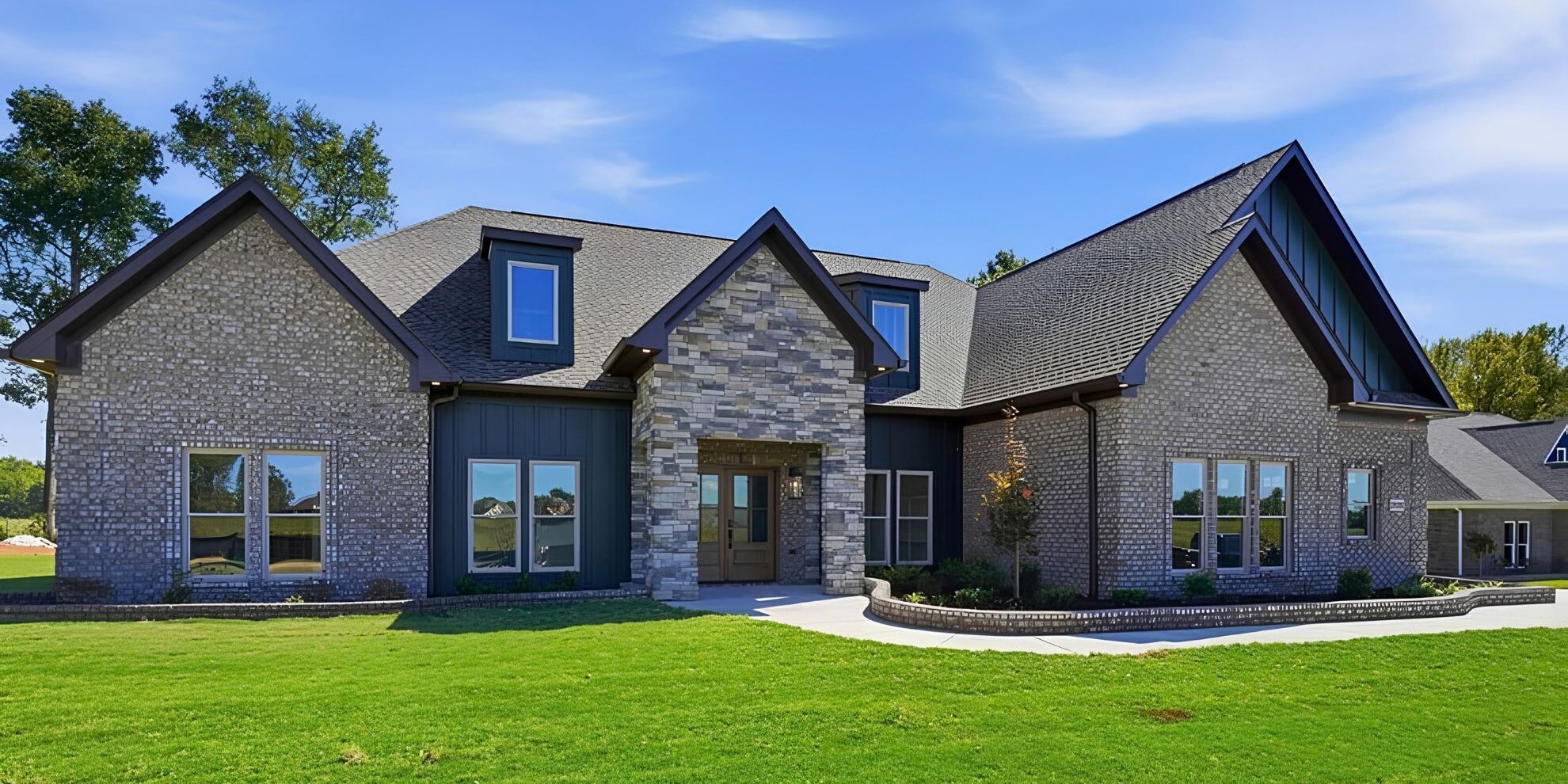
When a family calls us from Northern Virginia or Colorado Springs, they’ve usually done more homework than the buyer who lives twenty minutes down the road.
They’ve compared builders. They’ve looked at floor plans. They’ve read reviews and worked out a price per square foot. By the time we speak, they often know our standard specification better than some of our local buyers do.
And almost every one of them has the same blind spot. They’ve spent months on the house and about an afternoon on the land.
We understand why. The house is the part you can see in photographs. The land is just the dirt underneath it, and from 1,800 miles away it all looks about the same on a satellite map.
But it can have just as much to say about what that home is worth twenty years from now as what we put on top of it. And it’s the one part of this you genuinely cannot assess from where you’re sitting.
Why There’s No Zoning Out Here
(And Why Nobody Tells You That)
If you’re coming from somewhere with a strong planning department, you’ve probably assumed zoning handles this. Out here, it only handles part of it.
Limestone County does have zoning authority over its unincorporated areas, so this isn’t a total absence of rules. But what that zoning actually controls is broader than most people expect, and narrower than they need. It can separate residential land from industrial or commercial use, but it doesn’t reach the size, value, or standard of the specific home built on the lot next to yours.
So being zoned residential doesn’t guarantee much on its own. A residential zone can still hold a home built for a fraction of your budget, on a fraction of your land, right next door, because zoning was never built to prevent that.
What the county does enforce out here:
1. Subdivision regulations, which govern how land is divided into lots.
2. A flood damage prevention ordinance.
There’s no building code on that list, because there isn’t one out here in the traditional sense. Whatever construction standard a builder holds to is entirely their own choice, and nothing requires them to hold to any standard at all.
So a family can buy three acres in a residential zone, build a beautiful home on it, and find the parcel across the fence, zoned the same way, is free to hold something at half the price of their house.
The One Thing That Does Protect You
When zoning doesn’t restrict what goes up beside you, only one thing can.
Private covenants recorded against the land – in the Probate Judge’s office, attached to the deed, and binding on whoever owns that parcel next.
This is where out-of-area buyers get caught, and it isn’t for lack of diligence. A parcel with covenants and a parcel with none look identical in photographs. They look identical on a GIS map. They look identical from a rental car on a Saturday afternoon. The difference sits in a filing cabinet in Huntsville.
The practical distinction to understand is between land inside a platted subdivision, which usually carries recorded covenants, and land that’s metes and bounds, meaning it was carved out by a written description of its boundaries with no plat and often nothing recorded against it at all.
Plenty of people build on metes and bounds and are perfectly happy. We’re not telling you to avoid it.
But the downside is straightforward, even if the legal terms aren’t. On land with nothing recorded against it, your neighbor can build almost anything, and whatever they build will affect what your home is worth. And since you can’t add covenants to land after you’ve bought it, it’s worth knowing which one you’re buying while you still have a choice.
The Same House, The Same Money, Two Different Lots
Picture a family with one house plan they love. Same builder, same finishes, same budget. Put one version on three acres of unrestricted land they found themselves, and the other in a platted community with recorded covenants.
Year one, those homes are indistinguishable. The brick, roofline, and appraisal are still identical.
Year eight is where they part company.
In the covenanted community, every home built nearby had to clear the same minimum size and construction standard. When that family sells, the comparable sales pulled on their home are other homes that met the same minimum, because nothing smaller or lower-standard was ever permitted to be built there.
On the unrestricted acreage, that family has no say in any of it. Somebody buys the adjoining parcel and puts up something well below their price point. Appraisers work from comparable sales, and those are now the comps. The equity doesn’t disappear dramatically. It’s just quietly not there on the day they need it, which for a family who may be transferred again is a day that could arrive without much warning.
Why Most Custom Builders Can’t Control What Happens Next Door
There’s a structural reason, and it isn’t anyone’s fault.
Most custom builders don’t own land. You find your lot, you buy it, and they put a house on top of what you bought. Their work begins after the decision that matters most has already been made. Ask them what’s going up next door and they honestly can’t tell you, because it was never theirs to control.
Holding acre-plus home sites ties up serious money for years. Very few builders are willing or able to do it, which is why builder-owned acreage is rare out here.
We hold ours. We develop our own communities, we record the covenants ourselves, and we sell the land and the house together as one package. Our covenants set a minimum square footage and construction standard for every home in the community, which is what actually protects your comparable sales. Nobody can put a smaller, lower-standard home on the lot beside yours, because the covenant won’t allow it.
Right now that keeps homes in the community broadly in the low $600s to $1 million and up, but the enforceable protection is the size and standard requirement, not the price tag itself.
Home sites run from .43 acres up to over 1.3, which puts roughly twenty to forty feet between you and your neighbor. Where we put 53 home sites, a production builder working that same ground would have fit 75 to 80. That decision cost us real money, and it’s the whole reason the place feels the way it does when you drive into it.
While we’re on what nobody’s checking, there’s one thing worth understanding plainly. There is no adopted building code out here. None.
We frame on 16-inch centers rather than the 24 a code area would typically set as a legal minimum. We use engineered I-joists and LVLs where it matters structurally, moisture-resistant subfloor materials, and we pay independent inspectors to hold us to a standard we set ourselves, because nobody else will. You’ll never see any of it once the drywall goes up, which is exactly why it’s worth asking about beforehand.
Where The Land Fits Into Everything Else
The land is one decision in a move made up of about eleven of them, and out here they’re all due at once. The lot, what’s recorded against it, what surrounds it, the build itself, they all have to land in the right order, and most of them are due before you’ve even arrived.
That’s what a free Building Clarity Session is for. By phone, video, or in person, it’s a conversation about your timeline, your constraints, and whether what we do fits what you’re trying to pull off. If you’ve already found a piece of land you’re serious about, bring us the parcel address and we’ll pull what’s recorded against it, look at what surrounds it, and tell you plainly what we see, whether or not you ever build a thing with us. Sometimes the answer is that it’s good land and we’d be glad to build there. Sometimes we’ll tell you what we’d want to know before we put our own money into it. And if what we do doesn’t fit, we’ll say so and point you somewhere better. We’d rather be useful than be your builder.
Either way you’ll know more than you do now. And we’d much rather you heard it from us in an afternoon than from an appraiser in year eight.
You didn’t choose this move. You can still choose how it goes.
Book a free Building Clarity Session →
Frequently Asked Questions
Does Limestone County, Alabama have zoning?
Yes. Limestone County has zoning authority over its unincorporated areas, but zoning only separates land uses, such as residential from industrial or commercial. It does not control the size, value, or standard of the home built on the lot next to yours, so a residential zone can still hold a much smaller home beside you.
Is there a building code in Limestone County, Alabama?
Not in the traditional sense. The county enforces subdivision regulations and a flood damage prevention ordinance, but there is no adopted building code out here. Whatever standard a builder follows is their own choice, so it is worth asking any builder what standard they hold themselves to and who inspects it.
What can legally be built next to my home on rural land in North Alabama?
On land with nothing recorded against it, usually metes and bounds parcels, a neighbor can build almost anything zoning allows, including a much lower-value home. Zoning rarely limits size or price. Recorded covenants are the only thing that restricts what goes up beside you, so check what is recorded before you buy.
How do covenants protect my home’s resale value?
Recorded covenants set a minimum size and construction standard for every home in a community. That keeps the comparable sales appraisers rely on at a similar level to yours. Covenants cannot be added to land after you buy it, so confirm they exist first. See how our covenanted communities work.
How do I find out if a parcel has covenants before I buy?
Covenants are recorded in the Probate Judge’s office and attached to the deed, so they will not show up in photographs or on GIS maps. Land inside a platted subdivision usually has them, while metes and bounds land often has nothing recorded. Newton Homes will pull what is recorded against a parcel address during a free Building Clarity Session.
Thinking about land in North Alabama? Contact Newton Homes or call (256) 867-0433 to talk through your parcel.


